Homepage / Kurt Kotrschal
Kurt Kotrschal

Kurt Kotrschal

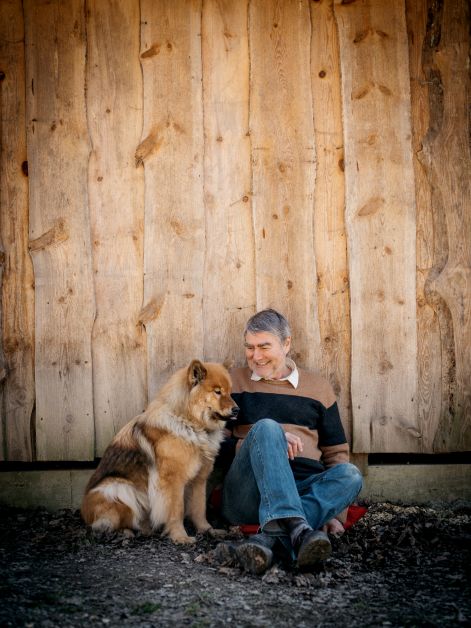
is a behavioural scientist and author. From 1990 to 2018 he was professor of behavioural biology at Vienna University and head of the Konrad Lorenz Research Centre for Ethology in Grünau, Austria. He is a co-founder of the WSC wolf science centre and spokesperson for AG Wildtiere at Forum Wissenschaft & Umwelt. He was named 2010 Austrian scientist of the year and his book "Wolf – Hund – Mensch. Die Geschichte einer Jahrtausende alten Beziehung" was chosen as the 2013 scientific book of the year. Kotrschal’s recent publications include "Mensch. Woher wir kommen, wer wir sind, wohin wir gehen" (2019). 
 

Books

Coverabbildung von 'Unser Recht auf ein Leben mit Tieren'

Kurt Kotrschal - Unser Recht auf ein Leben mit Tieren

Reden wir über Hunde, Katzen, Vögel, Fische und das liebe Vieh

Dieses Buch erkundet das widersprüchliche Verhältnis zu unseren stammesgeschichtlichen Verwandten, den Tieren. Wir schützen und jagen sie, lieben sie als Helfer und Gefährten, essen und fürchten sie, erkennen uns in Bildern und Fabeln über sie. Was also verbindet uns mit den „anderen“ Tieren? Anhand eindrücklicher Geschichten und aktueller Erkenntnisse aus Psychologie, Biologie und Ethik entsteht ein Panorama der Mensch-Tier-Beziehungen. Es zeigt, warum Tiere als unser anderes Ich für Wohlbefinden, Gesundheit und soziale Ordnung zentral sind – mehr denn je. Daraus erwächst die politische Aufgabe, ein Recht auf ein Leben mit Tieren zu denken und ihren Anspruch auf Respekt neu zu bestimmen.

Coverabbildung von ''

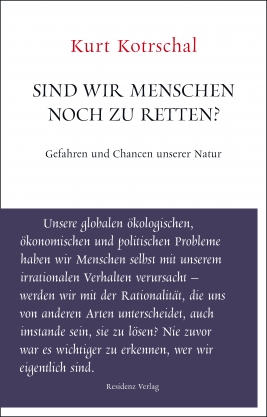
Kurt Kotrschal - Is there hope for us humans?

The dangers and opportunities of our nature

Human behaviour is driving our biosphere into the multiple crisis it is in today. But what is the evolutionary basis of human behaviour? And how much room for manoeuvre do we still have? The primary feature that distinguishes humans from other species is our rational potential, yet our everyday behaviour is shaped by irrational decisions. In view of the global survival problems we face, numerous and in some instances radical changes in behaviour are called for, both at an individual and a societal level. But most of all, we need a realistic perception of human nature. Never has it been more important to understand who we really are.