Homepage / Peter Henisch
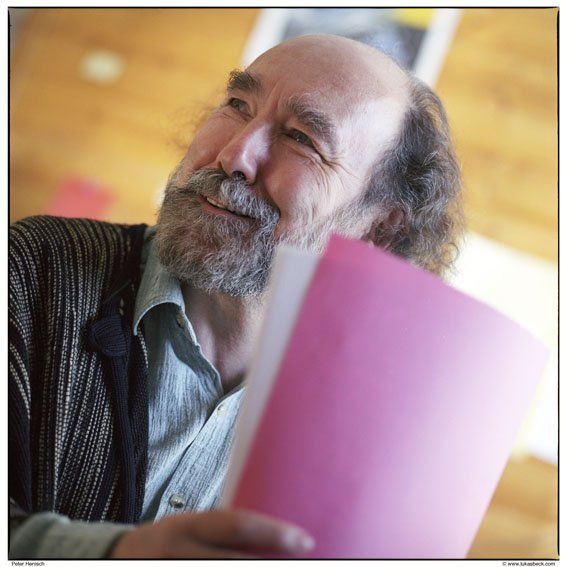
Peter Henisch

Peter Henisch

Born 1943 in Vienna; post-war childhood followed by reconstruction-era puberty; studied philosophy and psychology; co-founded “Wespennest” literary magazine with Helmut Zenker in 1969; a footloose author since the 1970s.

Henisch's debut novel “Die kleine Figur meines Vaters” was first published in 1975 (English translation “Negatives Of My Father” published in 1990). Many novels followed, including “Die schwangere Madonna” (2005), “Eine sehr kleine Frau” (2007), “Mortimer und Miss Molly” (2013), and “Suchbild mit Katze” (2016). He has received numerous awards, including the Austria Kunstpreis.  Most recently published by Residenz Verlag: “Der Jahrhundertroman” (2021).
Books

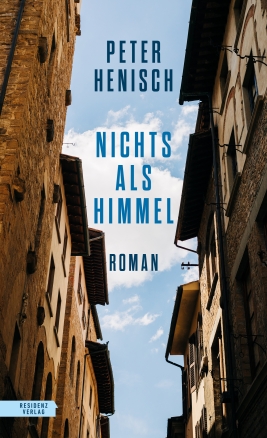
Coverabbildung von 'Nichts als Himmel'

Peter Henisch - Nothing but sky

In ‘Nothing But Sky’, Peter Henisch returns to his beloved San Vito, to a hidden apartment under the eaves in this small Italian town. For musician Paul Spielmann, who has just fled the pandemic and a midlife crisis in Vienna, it becomes a refuge. Paul finds peace during evenings on his terrace, taking photographs of metamorphosing clouds and flocks of birds, until suddenly a man appears across the roofs, one of the clandestini, refugees from Africa who are increasingly becoming a focus of protest and agitation among the Italian right wing. ‘Give me shelter’ the man begs, and Paul takes him in and helps him. Soon, he is drawn into a maelstrom of ambivalent emotions and political propaganda – and a growing friendship with Abdallah …

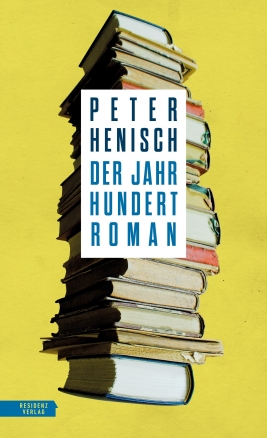
Coverabbildung von 'Der Jahrhundertroman'

Peter Henisch - THE NOVEL OF THE CENTURY

As a bookseller, elderly Mr Roch has always been surrounded by books. Now he's written his own "novel of the century". It's all about literature, from Musil and Roth through to Bachmann and Handke – stories in which the notion of possibility often overrides reality. Mr Roch asks Lisa, a student and waitress in his favourite café, to type up the manuscript for him. As she can't read his writing, he decides to read it out to her, but his papers are in a dreadful mess. An ambivalent relationship develops between the old man who's brimming with stories and the young woman who doesn't believe everything he says. But Lisa has other worries too – her friend Semira is due to be deported. Can Roch's storehouse provide a refuge for her?

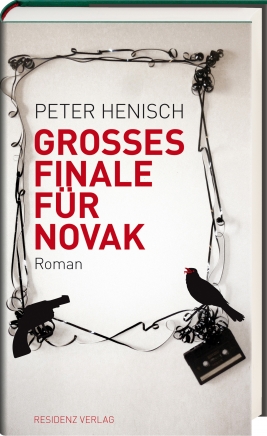
Coverabbildung von 'A grand finale for Novak'

Peter Henisch - A grand finale for Novak

Novel

Novak is a late bloomer when it comes to the wide world of emotions, which he discovers in a hospital, of all places. Because his hospital roommate keeps him from sleeping, the Indonesian nurse Manuela lends him her walkman and tapes, thus infecting him with her love of opera. After being discharged Novak somehow can’t get back into the routine of his regular, ordinary life. Manuela has opened his ears – not only to opera, but also to the annoying racket of everyday life: noise from lawn mowers, jackhammers and his wife Herta. While he continues his new of listening to opera, Herta suspects another woman behind his new passion. She’s not that far off the mark. But Manuela suddenly disappears. Was she merely an illusion on the stage of Novak’s middle-aged dreams? Or could his wife somehow be involved in her quiet disappearance? Even without her, the grand finale is a striking as an opera: cruelly dramatic.

Coverabbildung von 'The Pregnant Madonna'

Peter Henisch - The Pregnant Madonna

Novel

Josef Urban's one thought is to get away – so a car with the key left in the ignition offers the very chance. It is not his car, but this matters to him just as little as the fact that he has no driver's licence. He soon realises, however, that there is a girl asleep on the back seat. When she wakes up he tells her to get out, but she refuses. Maria, a schoolgirl, is the lover of the RI teacher to whom the car belongs. She is pregnant, and has little sympathy with the victim of the theft. She can understand Urban's escape attempt, however. The border is closer that they realise, and they suddenly find themselves in Italy. Josef is enjoying the trip and the company; but he cannot avoid feeling responsible for the girl – a thankless role, especially as it is hardly consistent with his love for the absurd. Nominated for the German Book Prize 2005 (Longlist)