Sie können dieses Buch vormerken:

Authors
Kyra Waldner (Edited by)

Since 2010, research associate at Vienna City Library’s Manuscript Department, exhibitions and publications on private handwritten address books and dedication photographs. Most recent publications: together with Marcel Atze “Es ist Frühling und ich lebe noch” ["It's spring and I'm still alive"] (2014), together with Tanja Gausterer “Wiener Salondame? Ein Alptraum! Lotte Tobisch – Charme, Engagement, Courage” [“Viennese society lady? A nightmare! Lotte Tobisch – Charme, dedication, courage”] (2022).

Marcel Atze (Edited by)

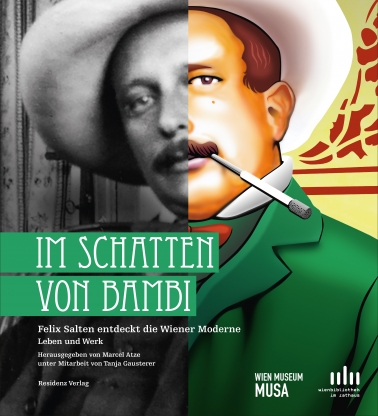
seit 2009 Leiter der Handschriftensammlung der Wienbibliothek im Rathaus, Ausstellungen und Publikationen u. a. zu H. C. Artmann und Friedrich Torberg. Zuletzt erschienen: "'ERLEDIGUNGEN'. Pamphlete, Polemiken und Proteste" (2014), "Es ist Frühling und ich lebe noch" (2014), „Im Schatten von Bambi. Felix Salten entdeckt die Wiener Moderne.“ (2020).

More Books

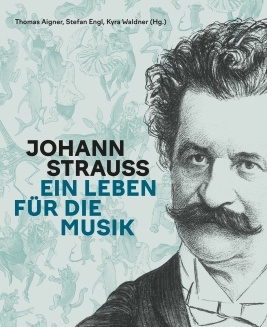
Coverabbildung von 'Johann Strauss'

Thomas Aigner (Edited by) Stefan Engl (Edited by) Kyra Waldner (Edited by) - Johann Strauss

A Life for Music

The volume accompanying the anniversary exhibition for the 200th birthday of the artist, organized by the Theatermuseum (Theater Museum) in cooperation with the Wienbibliothek im Rathaus (Vienna City Library), places Johann Strauss II at the center from various perspectives: In fifteen contributions with numerous illustrations of original documents, not only the social, economic, and musical historical as well as the familial environment of the composer and his musical work are illuminated, but also his reception in film and television. His role as an orchestra conductor, operetta composer, and precursor of modern world music stars is also explored, as is the genesis of his work in collaboration with others. The focus is also on the dazzling private person Johann Strauss, caught between ex

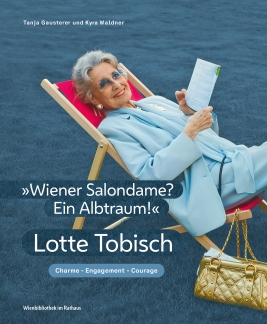
Coverabbildung von '„Wiener Salondame? Ein Albtraum!“'

Tanja Gausterer Kyra Waldner - „Wiener Salondame? Ein Albtraum!“

Lotte Tobisch – Charme, Engagement, Courage

Lotte Tobisch gilt als Inbegriff des geistreichen Charmes, der unprätentiösen Eleganz und beherzten Courage und zählte über Jahrzehnte zu den prägenden Persönlichkeiten des Wiener Gesellschafts- und Kulturlebens. Der Band zeigt mit besonderen Dokumenten aus dem Nachlass und aus Privatbesitz, wie Lotte Tobisch sich den Nimbus als »Grande Dame« mit ihrer großen Offenheit und Neugierde erarbeitet und erobert hat: Das intellektuell-künstlerische Milieu, in das sie als junge Schauspielerin und durch ihre langjährige Beziehung mit Erhard Buschbeck eintauchte, der intensive Austausch mit dem deutschen Philosophen Theodor W. Adorno oder ihre Kontakte zu Ludwig von Ficker, Fritz Hochwälder, Bruno Kreisky oder Christine Lavant machten sie für den Wiener Opernball zur Patronin par excellence.

You might also be interested in

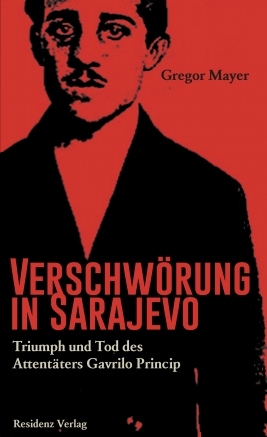
Coverabbildung von 'Conspiracy in Sarajevo'

Gregor Mayer - Conspiracy in Sarajevo

The triumph and death of Gavrilo Princip the assassin

Sarajevo, June 28, 1914: The Serbian student Gavrilo Princip shoots the Austrian heir apparent Franz Ferdinand and his wife. The assassination will serve as the reason for the Habsburg Monarchy to invade Serbia – and thus unleash the First World War. What drove the assassin of Sarajevo, what made his beliefs radical and turned him into an assassin? At the center of events we find phenomena that are uncannily topical: occupation, failed states, terrorism. Gregor Mayer draws parallels between the global political confusion prevalent at the time – with its dramatic upheavals and fear of modernization– and the politics of our day and age.

Coverabbildung von 'Habsburgs schmutziger Krieg'

Hannes Leidinger Verena Moritz Karin Moser Wolfram Dornik - The Habsburgs’ Dirty War

An Analysis of Austro-Hungarian Warfare 1914-1918

New research on the darkest chapter of World War I: the authors examine the strategies and calculations employed by the Habsburg ruling elite. They show how the war, which began with the main aim of destroying Serbia, was allowed to get out of hand, with no consideration of the losses. And what happened in the zones occupied by the Imperial armies? Were Austro-Hungarian forces responsible for war crimes? This book sheds a shocking light on chains of command, prejudices, and escalating violence towards suspects, civilians and ‘administrated masses’. A disturbing panorama of the Habsburg Empire’s path to downfall.